


Meeting rooms: acoustic treatment and soundproofing
"A good acoustic design is one that ensures desired sound is clearly heard while unwanted noise is minimized."
— Wallace Clement Sabine, father of architectural acoustics
Meeting rooms are essential spaces for business success—where critical decisions are made, innovative ideas are exchanged, and strategies are planned, even via video call.
Meeting rooms require clear acoustics to guarantee effective communication. Sound-absorbing panels are ideal for reducing reverberation and improving sound quality during conferences.
Soundproofing and acoustic treatment in meeting rooms are therefore not just a matter of comfort, but—above all—of productivity and efficiency.

Common acoustic issues in meeting rooms
- External noise: Meeting rooms located in hotels or commercial buildings often contend with unwanted external sounds that can disrupt concentration and communication.
- Adjacent rooms: When meeting rooms are next to each other, the risk of disturbance increases—especially if they are used simultaneously.
- Number of participants: Crowded meeting rooms can generate high levels of internal noise, making speech comprehension difficult.
- Use of microphones and AV equipment: Technologies like microphones and video systems require well-managed acoustics to avoid echo, reverberation, and feedback, all of which can degrade audio quality.
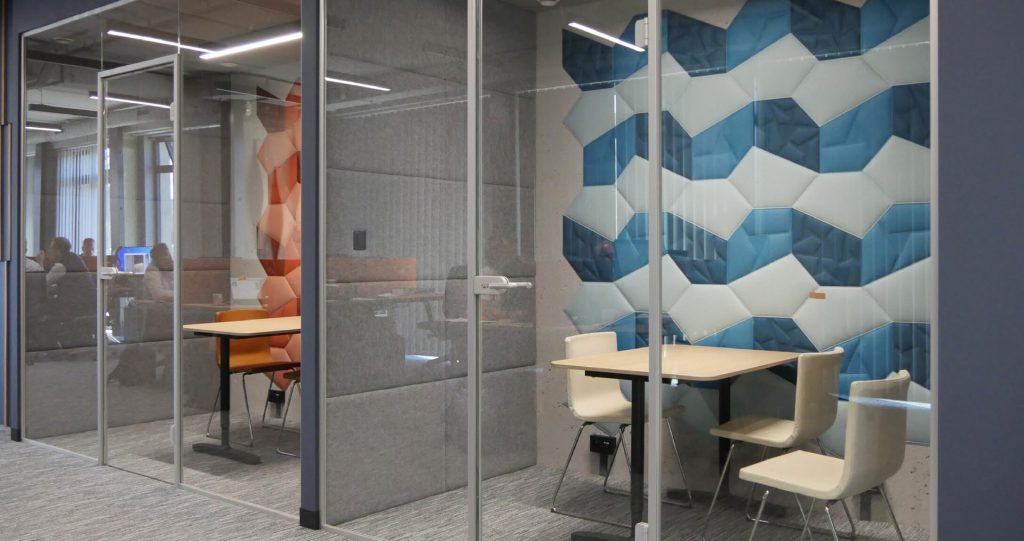
Solutions for meeting room soundproofing
To address these issues, installing sound-absorbing panels is one of the most effective solutions. These panels help improve acoustic quality by reducing background noise and absorbing unwanted sound energy.
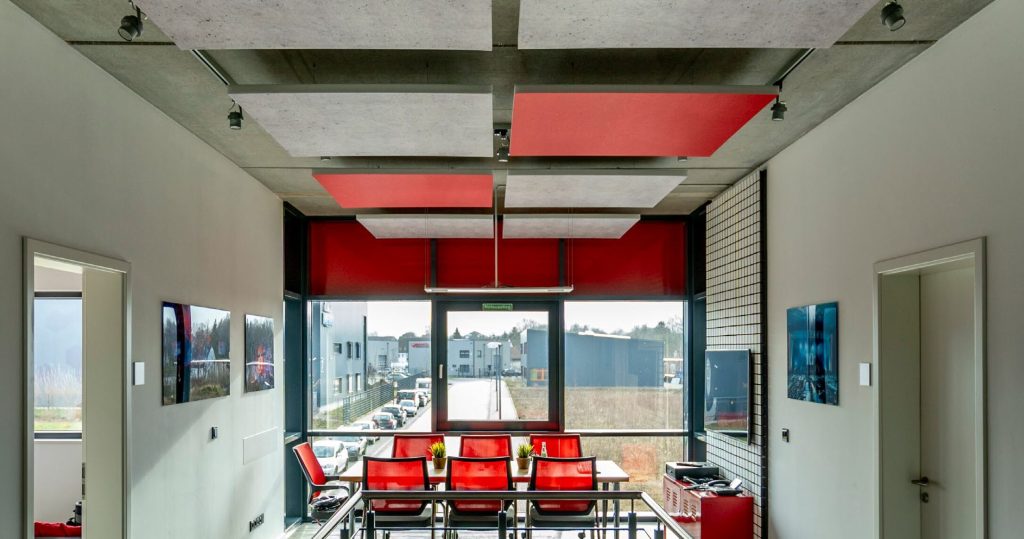
Reverberation reduction
The panels absorb acoustic energy, shortening reverberation time and enhancing speech clarity
Acoustic insulation
They limit sound transmission between adjacent rooms, enabling parallel meetings without interference
Design flexibility
Available in various colors and shapes, panels can be aesthetically integrated into the room’s decor
Materials for soundproofing
Choosing the right material is crucial for optimal soundproofing results. Commonly used materials include:
- Acoustic panels: Lightweight and easy to install, they are ideal for absorbing mid to high frequencies.
- Fiberglass: Offers excellent sound-absorbing performance and is often combined with other materials.
- Perforated wood: Aesthetic option that merges sound absorption with a natural wood finish.
How to optimize meeting room acoustics
- Strategic placement: Install panels on walls and ceilings to cover reflective surfaces and maximize sound absorption.
- Use of rugs and curtains: These elements further enhance acoustics by absorbing sound.
- Balanced distribution: Ensure panels are evenly distributed to avoid areas with too much or too little absorption.
Meeting room soundproofing: investing in efficiency
Investing in meeting room soundproofing means investing in workplace efficiency and productivity. Well-designed acoustics not only eliminate distractions caused by external and internal noise but also facilitate clear and precise communication—essential during presentations or strategic discussions. The acoustic quality of a room adds significant value to participants’ experience, improving concentration and interaction. In a high-level professional context, where first impressions matter, soundproofing is a vital investment to ensure successful meetings and create an environment that reflects professionalism and attention to detail. A well-soundproofed meeting room provides a comfortable, private space—ideal for confidential meetings or negotiations—thus contributing to a superior corporate image.