


Acoustic comfort: a key element in spatial design
Acoustic comfort is a crucial aspect of spatial design, yet its importance is often underestimated. In an increasingly connected and noisy world, the sound quality of the spaces where we live and work can greatly impact our well-being and productivity. Understanding and optimizing acoustic comfort is essential to create environments that not only meet functional needs but also improve quality of life.
What is acoustic comfort?
Acoustic comfort refers to the quality of the sound environment, meaning the ability of a space to provide an appropriate noise level and good sound quality for the activities taking place within it. This concept goes beyond simply reducing unwanted noise; it also includes optimizing the sound inside the environment, ensuring that useful sounds are clearly perceived and that there are no disturbing reverberations or overlapping sound waves.
In other words, a space with good acoustic comfort allows people to concentrate, relax, or interact without being disturbed by intrusive noises, thereby enhancing their overall experience and well-being.
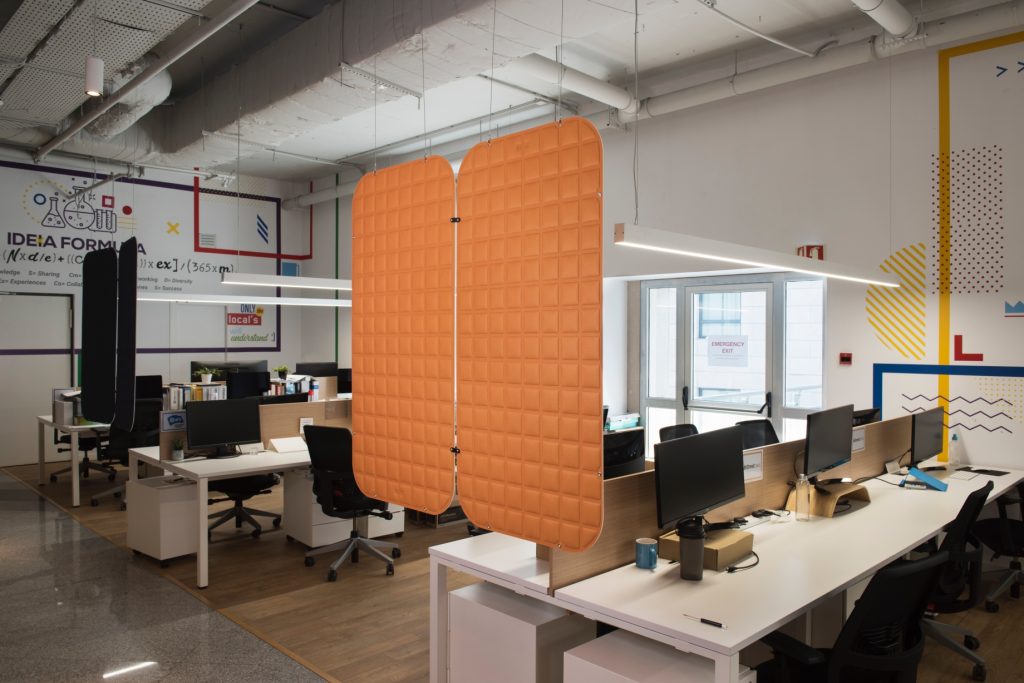
The importance of acoustic comfort in spaces
Acoustic comfort is essential in various contexts. For example, in a workplace, good acoustics can help improve concentration, reduce stress, and increase productivity. In private residences, an acoustically comfortable environment can promote rest and relaxation, creating an oasis of tranquility away from outside chaos.
Even in public spaces such as restaurants, hotels, or theaters, acoustic comfort plays a decisive role in user experience. A restaurant that is too noisy can become unpleasant and drive customers to seek a more welcoming atmosphere elsewhere. Similarly, in a hotel, good sound insulation can make the difference between a restorative night’s sleep and a disturbed one.
How to improve acoustic comfort in spaces
Improving acoustic comfort requires careful planning and the adoption of specific design solutions. Here are some of the most effective strategies:
1. Sound insulation
Sound insulation is essential to prevent external noise from entering indoor spaces, and vice versa. Sound-absorbing materials, such as insulating panels in walls, floors, and ceilings, can drastically reduce sound transmission, creating quieter and more comfortable environments.
2. Sound absorption
To reduce reverberation and overlapping sound waves inside a space, it is important to use materials that absorb sound, such as carpets, heavy curtains, upholstered furniture, and acoustic panels. These elements help create a more balanced sound environment, where sounds are pleasant and do not interfere with daily activities.
3. Sound diffusion
Sound diffusion ensures that sound is distributed evenly throughout a space, avoiding the creation of areas that are too loud or too quiet. Acoustic diffusers and the correct arrangement of furnishings can improve the perceived sound quality across the environment.
4. Integrated architectural and acoustic design
Good acoustics begin with architectural design. The choice of materials, spatial layout, and the use of acoustic barriers significantly affect the sound quality of an environment. Collaborating with experts in acoustics and lighting design, such as 15p’s team, makes it possible to integrate these aspects from the earliest stages of the project, ensuring excellent results.
Why invest in acoustic comfort?
Investing in acoustic comfort is a strategic choice for any design or renovation project. Proper management of acoustics not only improves the livability of spaces but also enhances their functional and aesthetic value.
Relying on experienced professionals who can understand the specific needs of each environment and propose tailored solutions is key to creating harmonious, comfortable, and cutting-edge spaces. Acoustic comfort is, in fact, an added value that can determine the success of a project, ensuring well-being and satisfaction for those who live, work, or spend time in those spaces.